
Chimney Caps: The Complete Ontario Homeowner's Guide
Everything Ontario homeowners need to know about chimney caps—materials, installation, and how caps protect against water damage, animals, and downdrafts.
On this page
Last spring, a homeowner in Burlington called about water stains on his ceiling near the chimney. He'd had the roof checked—no leaks there. The flashing looked fine. But when we got up on the roof, the problem was obvious: no chimney cap.

Rain and snowmelt had been falling straight down the flue for years. The liner was deteriorating. The mortar inside was crumbling. What should have been a $300 cap installation turned into a $2,000+ repair.
We see this pattern constantly. A chimney cap is one of the cheapest forms of protection you can add to your chimney—and one of the most neglected.
"Chimney capping was done recently. James was easy with modifying the original job order after starting the work. His team was polite and efficient. Lawrence and Greg worked diligently in completing the job and clearing up the debris." — Ren K.
This guide covers what you need to know about chimney caps in Ontario: what they do, which materials last, when to DIY versus call a pro, and how to avoid the expensive damage that comes from leaving your chimney open to the elements.
What a Chimney Cap Actually Does
A chimney cap is a metal cover that sits over your flue opening. It does four things:
Keeps water out. This is the big one. Rain, snow, and ice falling into an uncapped chimney cause mortar deterioration, liner damage, and interior water stains. In Ontario's freeze-thaw climate, that water expands and contracts 40-60 times per winter, cracking everything it touches.
Blocks animals. Raccoons, squirrels, and birds love warm chimneys for nesting. Once they're in, you're dealing with blockages, odours, and potential fire hazards from nesting materials. The mesh screen on a cap keeps them out.
Prevents downdrafts. Wind can push smoke back into your home. A properly designed cap deflects wind while allowing smoke to escape.
Stops sparks. The mesh screen catches embers before they land on your roof or nearby trees.
The Ontario Building Code requires chimney caps to extend at least 25mm beyond the chimney wall with a drip edge—this prevents water from running down the masonry and causing freeze-thaw damage.
Types of Chimney Caps

Single-Flue Caps
The most common type. These clamp directly onto the flue tile and cover one opening.
Best for: Standard chimneys with one fireplace or furnace flue. Straightforward to install if you're comfortable on a roof.
Multi-Flue Caps
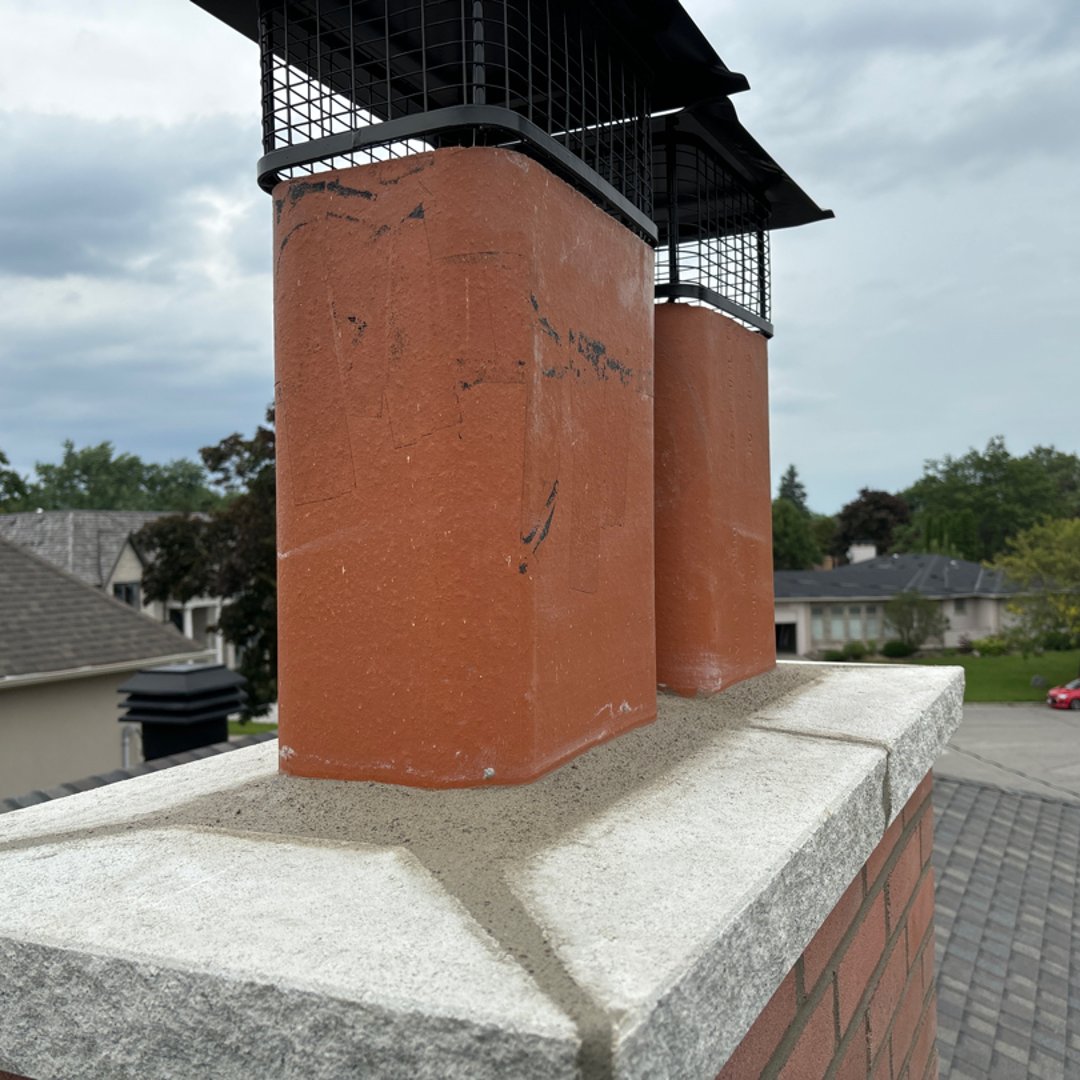
Cover the entire chimney crown, protecting multiple flues under one cap. These mount to the crown itself, not individual flues.
Best for: Homes with multiple fireplaces or a combination of fireplace and furnace flues. Provide better overall protection and look cleaner than multiple single-flue caps.
Top-Mount Damper Caps
Combine a cap with a damper that seals the flue when not in use. A cable inside your fireplace opens and closes the damper.
How they work: When closed, they create an airtight seal that stops heated air from escaping up the chimney. Traditional throat dampers (inside the firebox) leak air even when "closed."
Best for: Homeowners with fireplaces they don't use often. The energy savings from stopping heat loss can pay for the higher upfront cost within a few heating seasons.
Chimney Cap Materials: What Lasts in Ontario
| Material | Lifespan | Best For |
|---|---|---|
| Galvanized Steel | 5-10 years | Budget option, expect to replace |
| Stainless Steel | 20-30 years | Best long-term value (our recommendation) |
| Copper | 50+ years | Heritage homes, premium aesthetics |
Why Material Matters Here
Galvanized steel is the cheapest option, but Ontario's wet winters eat through the zinc coating within 5-7 years. Then it rusts. You'll replace a galvanized cap 3-4 times in the lifespan of one stainless cap.
Stainless steel (304 or 316 grade) handles freeze-thaw cycles without corroding. It costs more upfront—but you install it once and don't think about it for decades. Grade 316 adds extra corrosion resistance if you live near highways with winter de-icing salt.
Copper lasts longest (50+ years) and develops an attractive green patina over time. It's 3-4x the cost of stainless and makes sense for heritage homes or chimneys that are a prominent architectural feature.
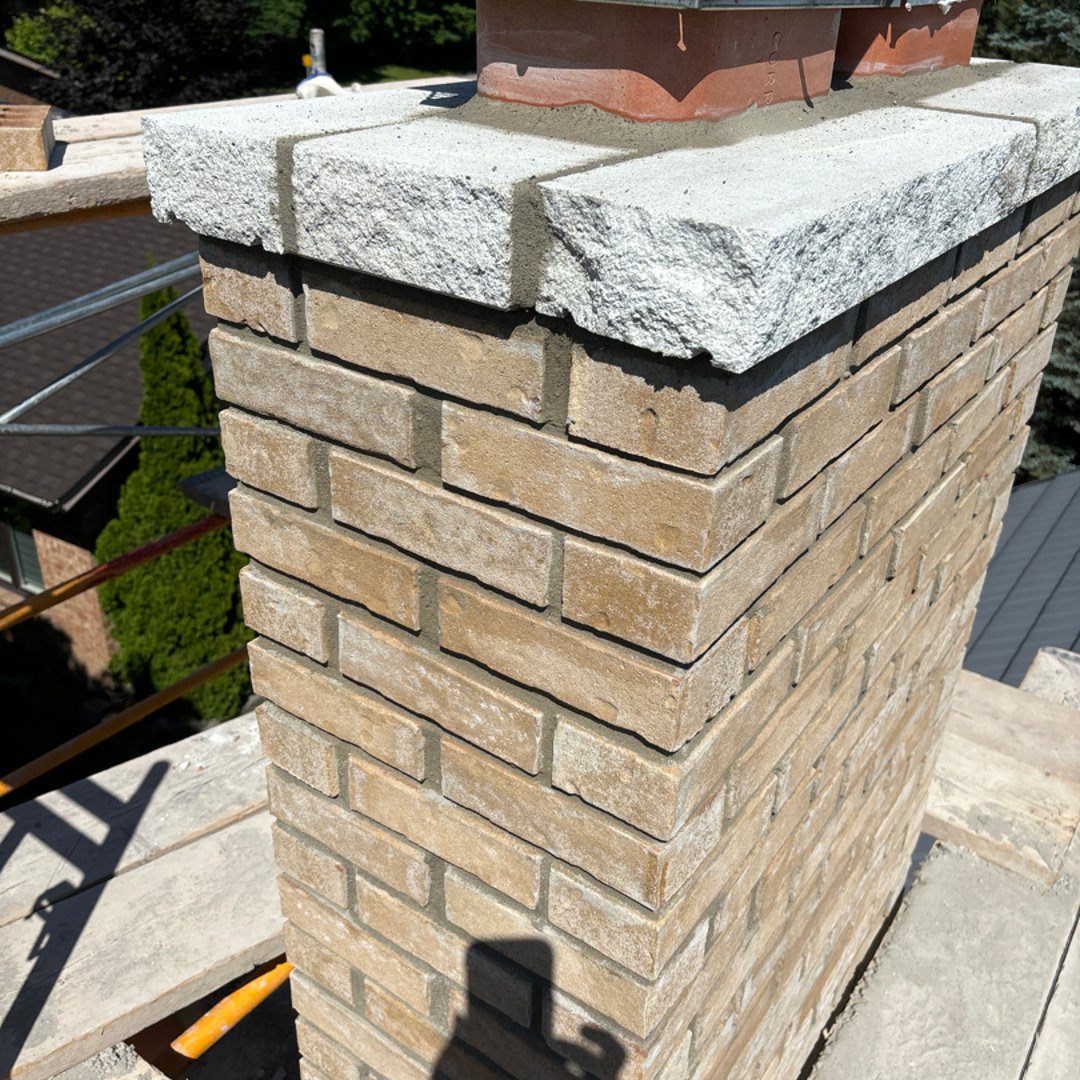
Our recommendation: Stainless steel for most Ontario homes. The math works out better than replacing galvanized every few years.
"They replaced 200 plus bricks and installed a new cap in one day. The crew was prompt, did excellent work and completed job as quoted. Site was left clean." — Richard B.
What Chimney Caps Cost
Chimney caps range from $50-$500+ for the cap itself, depending on material, size, and whether it's single-flue or multi-flue.
Professional installation adds $150-$900+, depending on:
- Roof access — Steep pitches or tall chimneys require safety equipment
- Crown condition — Cracked crowns need repair before capping
- Number of flues — Multi-flue installations are more complex
- Cap type — Damper caps require more setup than simple slip-ons
For an accurate quote on your chimney, contact us for an assessment. Every chimney is different.
When to DIY vs. Call a Professional
Safe for DIY (if comfortable on a roof)
- Single-flue slip-on cap with clamp attachment
- Replacing an existing cap of the same size
- Chimney in good condition—no visible cracks or damage
- Standard roof pitch you can safely walk on
Call a Professional
- Multi-flue chimneys with complex sizing
- Caps requiring drilling into masonry
- Crown damage that needs repair first
- Top-mount damper cap installation
- Roof pitch too steep to walk safely
- Chimney taller than two stories
Here's what we see regularly: a homeowner buys a cap, climbs up to install it, and discovers the crown is cracked in three places. The cap would've done nothing—water was already getting in around it.
"I received a very precise estimate to tear down my chimney and cap it... arrived right on schedule, protected your deck and lawn, and got the chimney safely taken down and capped in one day." — Martin
A quick assessment before you buy the cap can save you a trip up the ladder and a cap that doesn't solve the actual problem.
Signs Your Chimney Cap Needs Attention
Inspect your cap annually—spring is ideal, after winter stress. You can do a basic check from the ground with binoculars.
On the cap itself:
- Rust spots or holes in the metal
- Bent or dented top surface
- Loose screws or missing fasteners
- Cap sitting crooked or shifted
- Mesh torn or bent (animals trying to get in)
- Debris blocking the mesh (leaves, twigs)
Around the cap:
- Gaps between cap and flue tile
- Cracks in the chimney crown
- Water stains on the chimney exterior
Inside your home:
- Water stains on ceiling near chimney
- Musty smell from fireplace when not in use
- Dampness in the firebox
- Scratching sounds (animals)
If you spot any of these, get it checked before the problem grows.
Common Problems and How to Fix Them
Rust eating through the cap
Galvanized caps in wet climates rust out within 5-10 years. Replace with stainless steel—it's worth the upgrade.
Animals getting past the mesh
Damaged mesh or gaps let raccoons and squirrels in. Replace the cap and check for nests before sealing. If you have an active nest, wait until the animals leave (or call wildlife removal) before capping.
Cap shifting or coming loose
Usually caused by inadequate fasteners or high winds. Re-secure with proper clamps or masonry anchors. Multi-flue caps should be professionally mounted.
Ice dams forming on the cap
Poor attic insulation causes snow to melt and refreeze on the cap. The real fix is improving attic ventilation—the cap isn't the problem.
Water still getting in despite having a cap
Check the crown. If it's cracked, water seeps around the cap and enters the chimney anyway. Crown repair is often needed alongside cap installation.
Maintenance: Making Your Cap Last
Chimney caps need minimal maintenance:
- Annual visual inspection — Check for rust, damage, and debris from the ground with binoculars
- Clear debris — Remove leaves and branches from the mesh (carefully, from a ladder)
- Check after storms — High winds can shift or damage caps
- Spring check — Look for animal damage after nesting season
If you spot problems, address them before winter. Freeze-thaw cycles turn small issues into expensive repairs.
Common Mistakes to Avoid
Buying the wrong size. Measure your flue precisely. A cap that's too small won't seal; too large won't secure properly.
Ignoring crown damage. A cap protects the flue opening, but a cracked crown lets water in around the cap. Fix the crown first.
Choosing galvanized to save money. You'll replace it 3-4 times in the life of one stainless cap. The "savings" cost more in the long run.
Installing over an active animal nest. You'll trap the animal inside. Check before you cap.
When to Call Fix My Brick
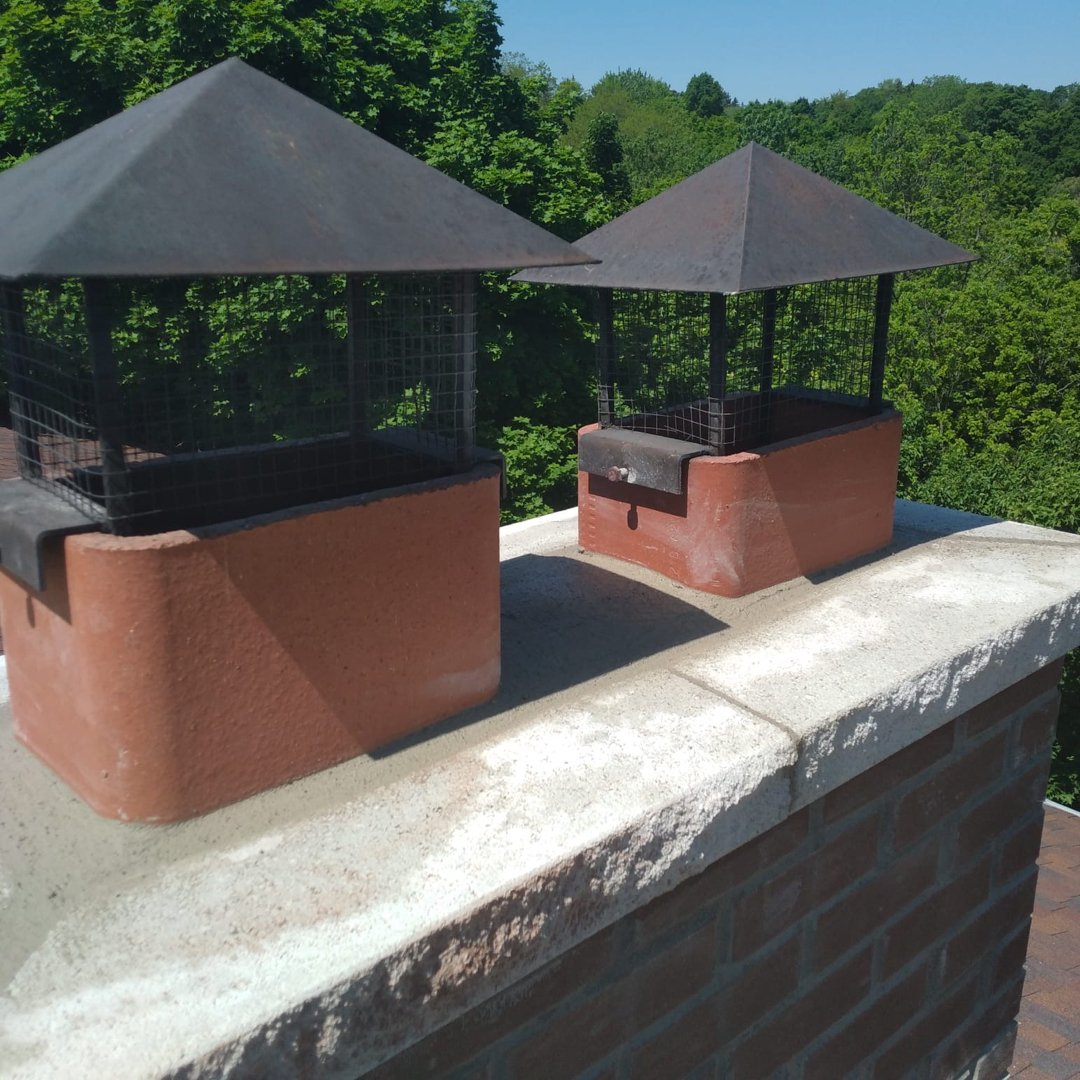
If your inspection reveals any of these, contact us for an assessment:
- Cracked or deteriorated chimney crown
- Damaged mortar joints on the chimney
- Signs of water infiltration
- Need for a multi-flue or custom cap
- Chimney taller than two stories
- Anything you're not comfortable handling on the roof
"I had a chimney that was falling apart and these guys brought it down to the roof line flashing and capped the chimney. Luke and Arthur showed up on time, worked hard and efficiently, and were very polite." — Christopher L.
We serve Hamilton, Toronto, Burlington, Oakville, and surrounding areas. Our crews handle everything from simple cap installations to full chimney repairs, crown work, and tuckpointing.
All work is done by our in-house crews (never subcontractors) and backed by our 2-year workmanship warranty.
Book an Assessment or call (905) 807-0404.
Need Professional Masonry Services?
Our expert team is ready to help with all your masonry repair and restoration needs across Ontario.